.jpg)



‘FIX THE BRIDGE’: Taxi chairman blasts political paralysis as Hammersmith closure enters eighth year

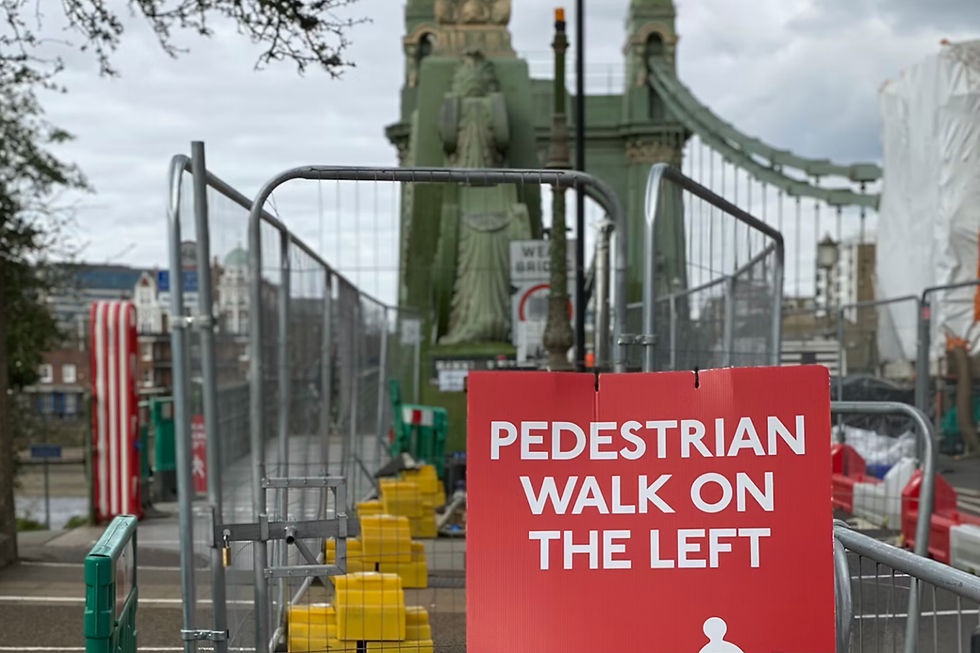

The chairman of the Licensed Taxi Drivers’ Association (LTDA) has criticised the prolonged closure of Hammersmith Bridge to motor vehicles, warning that the disruption continues to damage passenger mobility and commercial activity across west London.
Paul Brennan described the Grade II listed crossing as a symbol of political indecision and missed opportunities, arguing that those responsible for London’s transport network have failed to resolve problems documented for more than a century.

Hammersmith Bridge has been closed to motor traffic since April 2019 after engineers identified microfractures in its cast-iron pedestals. It reopened to pedestrians, cyclists and river traffic in July 2021, while its main carriageway became available to pedestrians and cyclists in April 2025 following stabilisation work.
However, taxis, buses and other motor vehicles remain unable to use the crossing. Traffic has instead been diverted towards other routes across the Thames, including already-congested bridges and junctions in west London.
Writing in the LTDA’s Taxi newspaper, Brennan said: “For us taxi drivers, the Hammersmith Bridge is not simply an historical landmark spanning the Thames, it represents years of political indecision, bureaucratic paralysis and missed opportunities.
“More importantly, it demonstrates how those responsible for managing London’s transport network continue to underestimate the importance of keeping people moving.”
Brennan said movement supported employment, hospitality, healthcare and retail activity, with disruption affecting areas beyond the immediate location of the bridge. He argued that extended diversions were creating longer passenger journeys and additional costs for commercial traffic.
The LTDA chairman also drew attention to the bridge’s much longer history of capacity and maintenance problems. He cited the 1926 Royal Commission on Cross-River Traffic in London, which reportedly identified the crossing as a source of congestion and recommended that it should be rebuilt and widened to carry four unrestricted traffic lanes.
Brennan said: “When a major river crossing closes, traffic does not disappear. It simply re-routes itself.”
He added: “Journeys become longer, for a start and congestion increases on surrounding routes. Businesses lose customers. Commercial traffic incurs additional costs. Disabled and elderly passengers face greater difficulty accessing services.”
Hammersmith and Fulham Council owns the bridge and is legally responsible for maintaining it. The Department for Transport said it had provided almost £13 million towards the structure by February 2025, including funding for emergency investigations, stabilisation, geotechnical work and temporary resurfacing.
The council has previously estimated that reopening the crossing to motorised traffic could cost around £120 million. Stabilisation of the pedestals was completed in February 2025, but full strengthening and restoration work is still required before vehicles can return.

A Hammersmith Bridge Taskforce involving the Government, the two affected boroughs, Transport for London, the Greater London Authority and the Port of London Authority was reconvened in January 2025. Despite the progress made on pedestrian and cycle access, no confirmed date has been announced for reopening the bridge to taxis and other motor vehicles.
For the taxi industry, the absence of a direct river crossing between Hammersmith and Barnes continues to affect route planning, journey reliability and metered fares. Brennan said the wider economic consequences were being felt by residents, hospitals, schools and businesses throughout west London.