.jpg)



Industry’s busiest winter in years reflected in new TaxiPoint Magazine issue covering VAT reform and national licensing plans

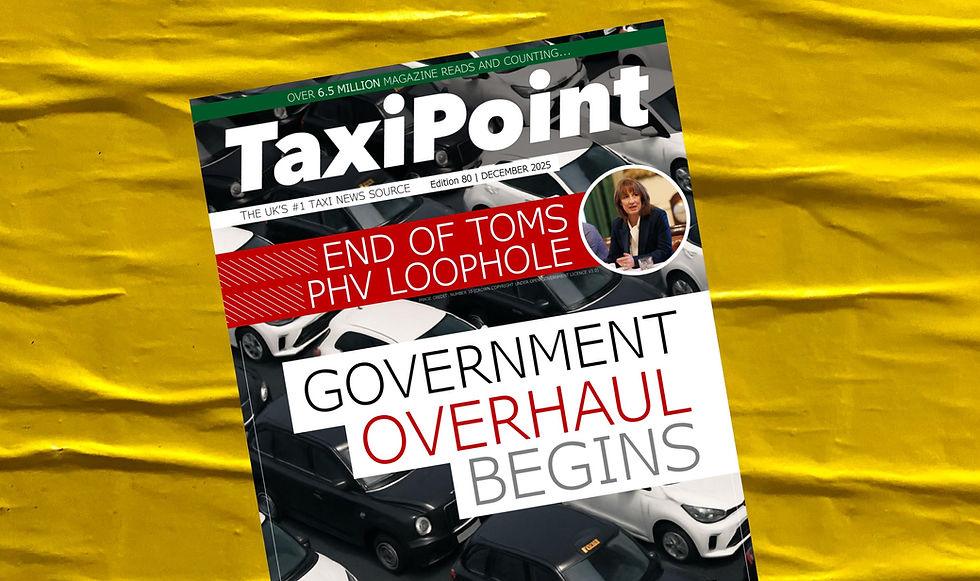

TaxiPoint has released its December 2025 magazine, offering one of its most detailed editions of the year as major regulatory, tax and operational changes reshape the UK taxi and private hire landscape.
The 48-page issue, which marks the publication’s 80th edition, brings together national policy developments, regional reactions and frontline industry analysis during what Editor Perry Richardson describes as a decisive period for the sector.

The cover story focuses on the Government’s decision to close the Tour Operators Margin Scheme (TOMS) loophole from January 2026. The change brings standard 20 percent VAT to private hire fares, ending a long running dispute over tax treatment. The magazine highlights strong reaction from operators, unions, and industry figures, including detailed commentary from the Licensed Taxi Drivers’ Association, Veezu, Addison Lee and Uber. The story notes that London fares will continue to differ from the rest of the UK, with agency model rules remaining decisive outside the capital.
Another feature article examines the Government’s wider licensing reform package. Ministers are preparing to introduce national minimum standards and are consulting on reducing the number of licensing authorities from 263 to 70. The magazine sets out how the changes aim to address inconsistent enforcement and cross-border issues, and includes responses from Baroness Casey, TfL, trade unions and commercial operators. The edition also explores the likely impact on local oversight and vehicle requirements as the sector braces for structural realignment.
Regional and operational coverage remains a central component of the issue. Basingstoke’s record rise in licensed taxi numbers, Crawley’s new vehicle branding and mandatory payment rules, and cross-boundary enforcement activity in Telford, Wolverhampton and Bristol Airport are all included.
Driver-focused analysis features prominently. One article investigates pension shortfalls among self-employed taxi drivers, warning that a majority are heading towards retirement with insufficient savings. Another explores the decline of cash usage, with some London cabbies reporting entire weeks without handling banknotes. The edition also highlights continued legal action over guide dog refusal offences, reinforcing the personal responsibility held by licensed drivers.
Business developments also receive attention, including Freenow by Lyft’s new integration with Concur Expense, Zoom Cars’ winning bid to operate Bristol Airport’s taxi concession from February 2026 and LEVC’s social media campaign aimed at attracting new Knowledge applicants. Advertising content showcases new technology, electric vehicle options and fleet solutions relevant to professional drivers across the UK.
Richardson notes in his editorial that the sector enters 2026 with shifting rules, new enforcement expectations and a raft of policy decisions that will affect operators, drivers and passengers for years. The latest edition positions itself as a detailed guide through those developments, providing the trade with the policy context and regional insight needed to navigate a period of accelerated change.