A railway station taxi rank should serve passengers, not become a private club for the chosen few

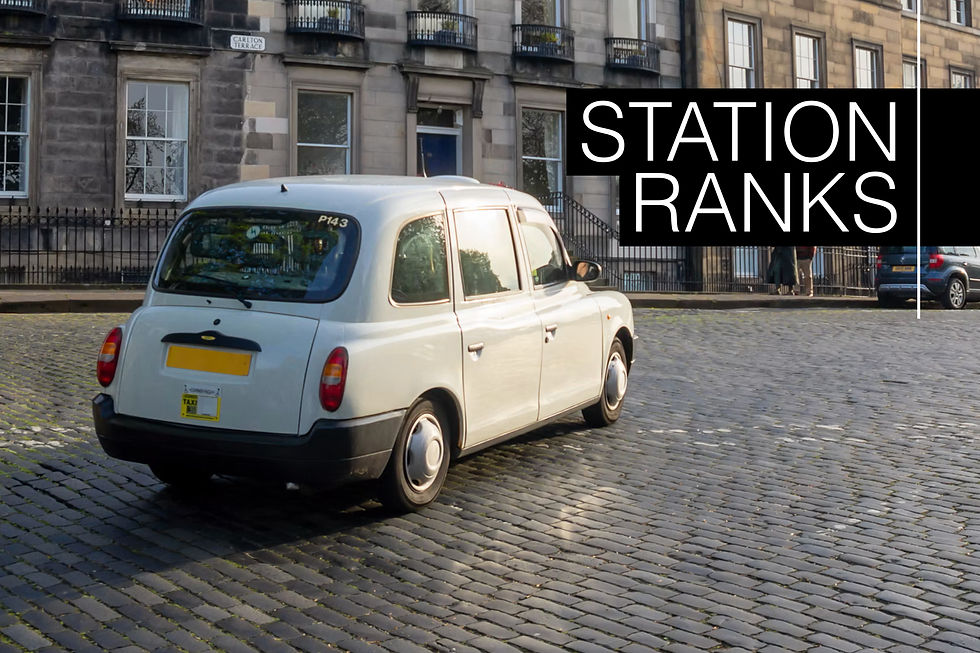

A taxi rank outside a railway station looks like a fairly simple arrangement. Trains arrive, passengers need transport and licensed taxis wait to collect them.
In practice, some stations operate permit schemes, controlled access arrangements and commercial concessions that determine which drivers can work from particular locations. There may be sound operational reasons for those restrictions, but the question is whether they genuinely serve passengers or simply protect an established group of permit holders.

The Office of Rail and Road has examined this issue before. Its taxi access to railway stations market study investigated whether station permit arrangements harmed competition or passenger interests. The regulator considered concerns about permit prices, availability and the way concession rights were awarded. Station forecourts are seen as valuable commercial locations, and access to them can influence which taxi businesses receive work.
Railway stations are not ordinary public highway taxi ranks in every respect. Station operators may need to control traffic movements, protect pedestrians and coordinate taxis with buses, deliveries and emergency vehicles. At busy terminals, unrestricted vehicle access could create congestion or make passenger collection less reliable. A properly designed permit system can have a legitimate purpose, particularly where space is limited and demand arrives in concentrated bursts.
The difficulty begins when access becomes unnecessarily restrictive. A driver may hold a valid hackney carriage licence for the relevant area but still be unable to work from a particular station rank without another permit. If permits are expensive, scarce or allocated through arrangements that favour existing holders, the station can become a separate commercial market with its own barriers to entry.
There is also a difference between managing rank capacity and controlling competition. A station may reasonably limit how many vehicles enter a confined forecourt at once. It does not necessarily follow that only a fixed group of drivers should be entitled to serve passengers there indefinitely.
The passenger’s interest should remain central to any decision. Somebody arriving late at night should be able to find a legitimate, clearly identifiable taxi without unnecessary confusion. Passengers with mobility difficulties may need vehicles close to the station entrance. A system that pushes available licensed taxis away from convenient collection points can make those journeys harder. Equally, unmanaged vehicle queues can obstruct access and create safety problems. Neither outcome is particularly impressive.
The trade should not oppose station management simply because it involves rules or charges. Orderly ranks can benefit everyone involved. What drivers should resist is a system where access becomes an asset controlled for its own sake, with little evidence that passengers receive a better service. A railway station is a public transport interchange. Its taxi arrangements should be designed around that purpose, not around preserving an exclusive queue.