.jpg)



A WORK AROUND: Some taxi drivers turn to ‘BRIDGING’ tools to dodge full HMRC Making Tax Digital software switch

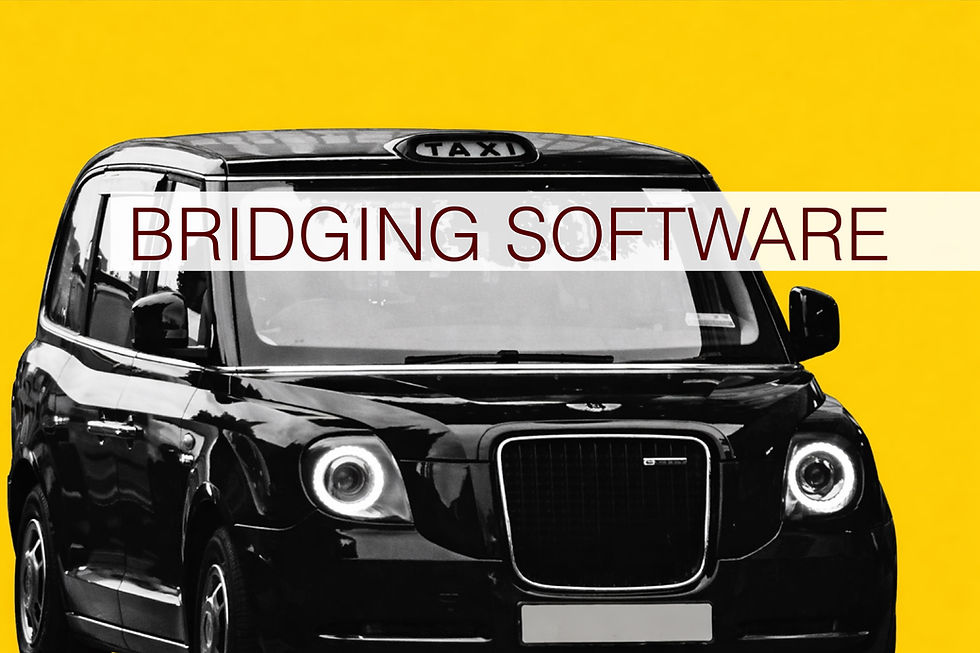

Taxi drivers and sole traders preparing for Making Tax Digital (MTD) for Income Tax are increasingly turning to so-called bridging software as a transitional solution, allowing them to remain compliant without fully abandoning existing spreadsheet-based systems.
Under rules set by HM Revenue & Customs, individuals turning over above £50,000 in revenue from April 2026 must maintain digital records and submit quarterly updates using MTD-compatible software. While many are expected to adopt full accounting platforms, bridging software is gaining traction among those seeking a lower-cost and less disruptive route to compliance.

Bridging software acts as a connector between manual records, typically spreadsheets, and HMRC’s digital reporting system. Rather than requiring drivers to change how they track income and expenses day-to-day, the software enables them to submit required updates directly from their existing records. This approach is particularly appealing to taxi drivers who have built established workflows around spreadsheets or basic bookkeeping tools.
Bridging tools are generally cheaper than full accounting packages and require less time to learn. For drivers who only need to meet compliance requirements without additional features such as invoicing or real-time reporting, the stripped-back functionality offers a practical alternative.
Spreadsheet users look to compliant ‘bridge’ tools to avoid full software switch under HMRC’s 2026 digital tax changes
However, accountants would caution that bridging software is not a complete workaround. Users must still ensure their records meet MTD’s digital record-keeping requirements, and manual processes must be structured correctly to avoid errors. Spreadsheets must be maintained accurately, and data must flow digitally into the bridging tool without manual re-entry that could breach compliance rules.
There are also operational limitations. Bridging software typically does not provide the broader financial insights or automation available in full accounting systems. This means taxi drivers using bridging tools may miss out on features that could support cash flow tracking or expense categorisation, areas that are increasingly important under quarterly reporting.
Despite these constraints, bridging software is expected to play a significant role during the early years of MTD adoption. Drivers may using the method as a stepping stone, allowing drivers to meet immediate compliance requirements while gradually transitioning to more advanced systems over time.
For some sole traders, particularly those with straightforward income streams, bridging software could remain a long-term solution. Taxi drivers operating independently with relatively simple finances may find the approach sufficient, provided they maintain accurate digital records and meet submission deadlines.
HMRC has indicated that a range of software options will be available, including bridging solutions, although it continues to encourage businesses to adopt fully integrated digital accounting systems where possible. The department maintains that broader software adoption will improve accuracy and reduce administrative errors in the long term.