.jpg)



Does FULLY ELECTRIC range anxiety remain a barrier for taxi drivers despite huge EV progress?

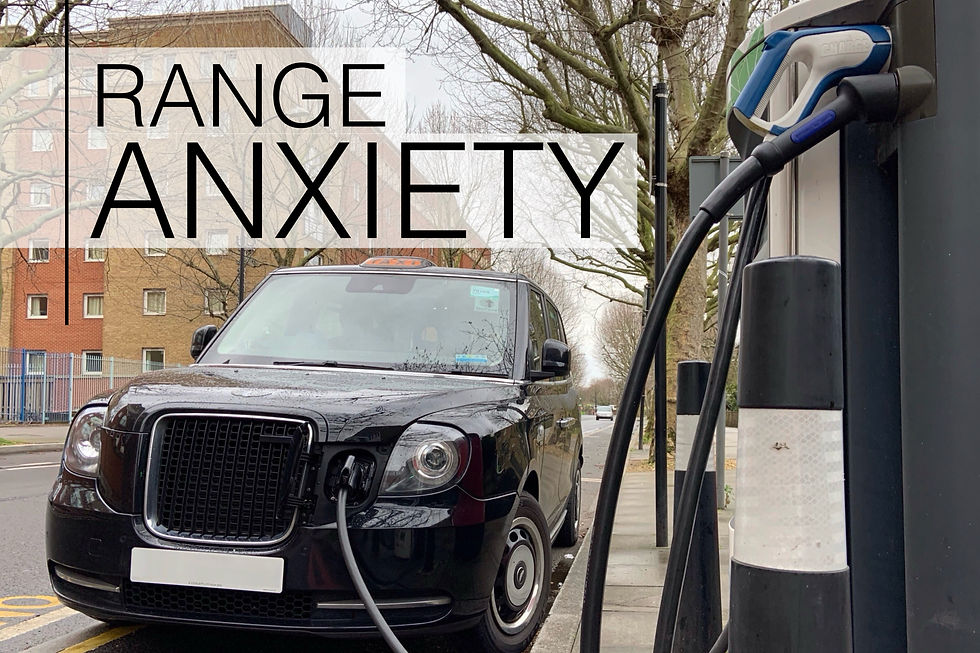

Range anxiety continues to influence taxi driver behaviour in the shift towards electrification, although its nature has changed as vehicle technology has improved. While modern purpose-built electric taxis have largely addressed concerns around driving distance, industry feedback suggests the issue now centres more on operational efficiency and lost earning time.
Vehicles such as the iconic LEVC TX were specifically designed to mitigate early concerns about limited battery range. The model offers around 80 miles of pure electric driving and up to 377 miles when supported by its petrol range extender. With typical taxi shifts ranging between 70 and 150 miles, the vehicle in theory provides sufficient coverage for most working patterns.

However, for cabbies operating a fully electric vehicle, range plays a huge part in any equation. The primary concern is the impact of charging where time spent locating and using public charging infrastructure can directly reduce working hours, particularly during peak demand periods.
As more people shift to EVs it in turn increases pressure on rapid charging networks. Drivers report queues, unreliable chargers and limited availability at key locations, creating uncertainty around whether they can maintain continuous service throughout a shift. This has led to what many now describe as “infrastructure anxiety” rather than traditional range anxiety.
Operational downtime and charging access, rather than vehicle range, continue to shape driver concerns over electrification
The continued reliance on range-extender technology reflects this reality. The petrol generator in vehicles like the LEVC TX provides a fallback option that removes the risk of downtime. This allows drivers to complete shifts without being dependent on charging availability, a factor seen as critical in a commercial sector where lost time equates directly to lost income.
A significant proportion of drivers exceed the pure electric range of current vehicles during a standard shift, with many regularly travelling beyond 100 miles per day. This creates a gap between real-world operating conditions and the capabilities of fully electric vehicles without backup systems like range extenders.
The transition to a fully zero-emission taxi fleet therefore remains constrained by several factors as it stands. There is currently a limited selection of purpose-built fully electric taxis that meet licensing requirements, particularly for wheelchair accessibility. At the same time, it is debatable whether charging infrastructure has yet to scale in line with fleet adoption, both in terms of volume and reliability.
While the industry continues to move towards cleaner vehicles, current conditions suggest a fully zero-emission taxi network is not yet practical without further trade-offs. Cabbies will be hoping for significant improvements in charging infrastructure, increased vehicle range under real-world conditions and greater market competition will be required to remove the remaining barriers.