.jpg)



“FUNDING WAS NEEDED NOW!”: Taxi industry sounds alarm as TfL rules out grants and loans for new black cabs

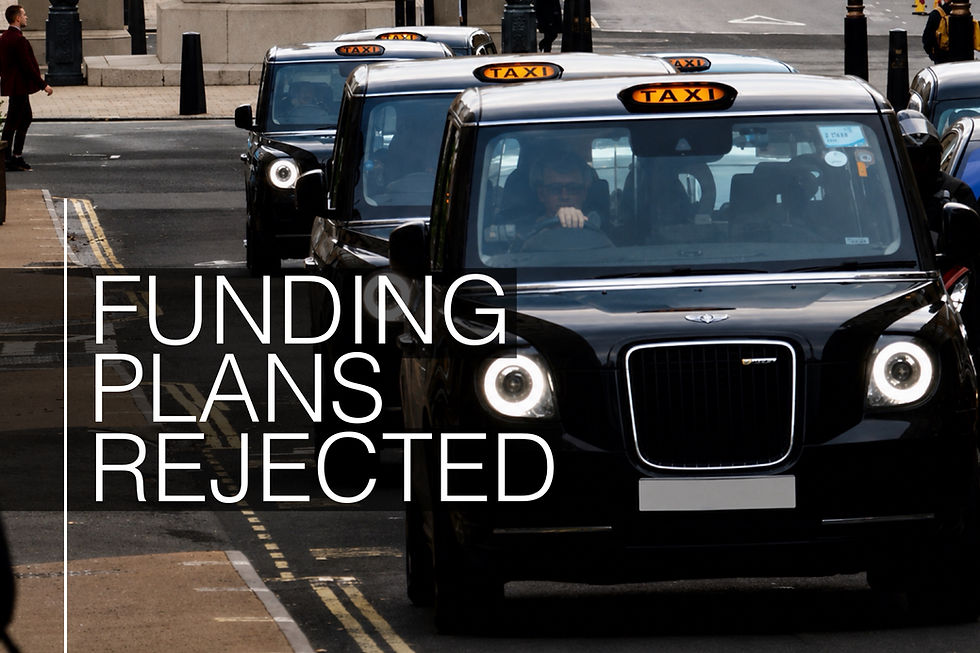

Freenow by Lyft has joined the Licensed Taxi Drivers’ Association (LTDA) in criticising Transport for London’s (TfL's) decision not to proceed with a proposed financial support scheme aimed at helping drivers purchase new zero-emission capable black cabs.
The reaction follows the publication of correspondence between LTDA General Secretary Steve McNamara and Transport Commissioner Andy Lord, in which TfL confirmed it would not move forward with plans for either a grant scheme or a low-interest loan programme to help drivers meet the high cost of replacing older taxis with newer cleaner vehicles.

Responding to the decision in TAXI Newspaper, McNamara described the outcome as a major disappointment for the trade.
“Last month, I received a letter from Andy Lord, the Transport Commissioner,” said McNamara. “Based on what he had to tell me, no amount of dressing it up can mask how disappointed everyone here at Taxi House was.”
McNamara said he had believed TfL understood the urgency of the situation facing the industry, particularly given the continued decline in taxi numbers.
Industry leaders warn London’s taxi fleet could shrink further as hopes of a vehicle purchase support scheme are shelved
“I genuinely thought that this time I had finally convinced them how desperately we needed this type of funding,” he said. “The letter does leave open the slim possibility that they may find some money in next year’s budget.
“But, as I have repeatedly explained to the entire top floor at Transport for London (TfL), as well as at City Hall, 1,500 cabs are coming off the fleet this year, so I thought I’d made it abundantly clear that the funding was needed NOW!”
The LTDA chief also criticised the rationale behind the decision, arguing that the value of London’s taxi service was not being fully recognised by policymakers.
“Their reasoning appears to be ‘affordability’ and ‘competing priorities’, which implies TfL and this government feel they have better things to invest in, yet another slap in the face from a system that doesn’t, on the surface, appreciate the true value of the world-class service we provide each and every day around London,” McNamara said.
The comments have now been backed by Freenow by Lyft, one of the largest taxi booking platforms operating in the capital. Danny O’Gorman, General Manager at Freenow by Lyft UK, said: “We are deeply disappointed by Transport for London’s (TfL) decision not to move forward with a new financial support scheme for purchasing black cabs. Without any financial support, it will be incredibly difficult for new and existing drivers to purchase a new, more sustainable taxi due to its high cost.”

O’Gorman pointed to the continued decline in the number of licensed taxis operating in London, warning that the absence of financial support could accelerate the trend.
“Recent TfL licensing figures highlight the devastating reality facing the trade, with the number of licensed black taxis plummeting from over 22,000 a decade ago to around 13,600. This stark decline is significantly impacted by the cost of zero-emission capable taxis. Without financial backing, more drivers will be priced out, accelerating the loss of London’s accessible and iconic taxi fleet.”
The latest generation of black cabs has become central to London’s transition towards cleaner transport, with all licensed taxis required to be wheelchair accessible and new vehicles meeting zero-emission capable standards. However, industry representatives have consistently argued that the high purchase price remains one of the biggest barriers to fleet renewal.
Freenow called on TfL and City Hall to continue discussions with the industry to find an alternative solution.
“TfL should work collaboratively with the sector to develop a deliverable alternative that is realistic and designed around what TfL can support,” O’Gorman said.
“At Freenow by Lyft we are ready to engage constructively with TfL to design a viable model that achieves our shared environmental goals without abandoning hardworking drivers. We urge the Mayor and TfL to come to the table and work with us on a sustainable solution before more drivers are forced off the road.”
Despite the setback, McNamara indicated that discussions around future support would continue.
“Since receiving this bad news, I have taken calls and emails from all sides at the Greater London Assembly (GLA), and, truthfully, they are as gutted as I am,” he said. “The only possible response from this low point is to regroup and organise fresh attempts to secure something from TfL’s next budget.”