.jpg)



SCRAP THE VAT: Government must act now before wheelchair-accessible taxi numbers fall further

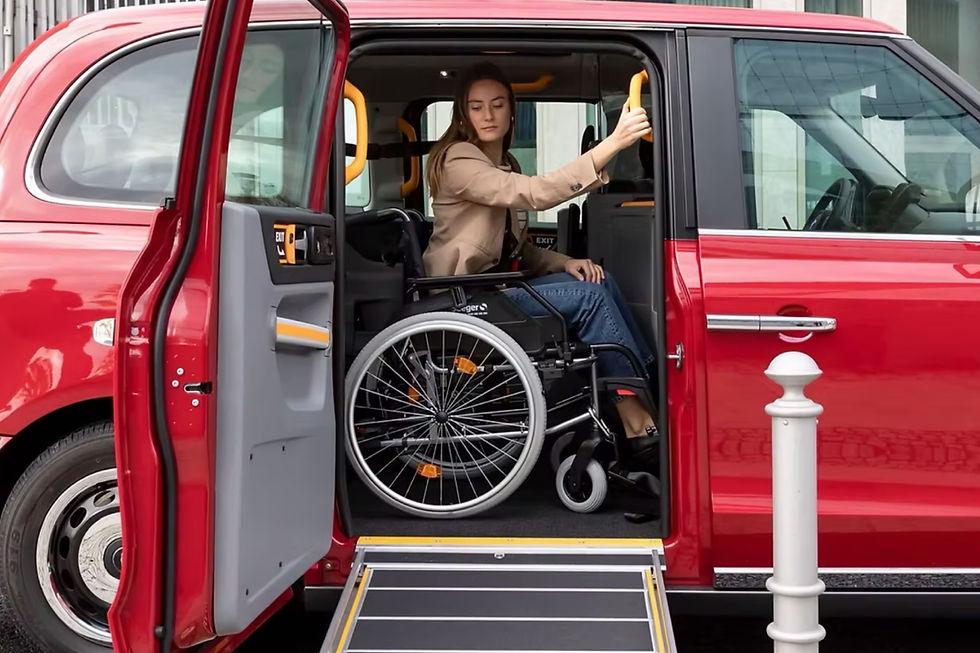

England is losing wheelchair-accessible taxis at a time when the wider licensed vehicle fleet is growing. That should concern both government and every licensing authority responsible for ensuring local passengers can travel safely and independently.
The latest Department for Transport (DfT) figures show that the number of wheelchair-accessible taxis fell by 8% between 2024 and 2026, dropping to around 28,000. Across taxis and private hire vehicles combined, the accessible fleet declined by 4% to approximately 34,500.

Meanwhile, the total number of licensed taxis and PHVs increased by 9% to 342,300. Only 10% of those vehicles were wheelchair accessible.
The local figures are worse in some areas. Derbyshire Dales, North East Derbyshire, Rutland, Blaby, Epping Forest, Elmbridge and West Devon recorded no wheelchair-accessible taxis or PHVs. Those seven authorities licensed 1,113 vehicles between them, but not one was recorded as wheelchair accessible.
There may be accessible vehicles licensed elsewhere that accept bookings in those areas. That is however not a substitute for dependable local provision and a wheelchair user should not have to hope that an appropriate out-of-area vehicle happens to be nearby. As we all know, cross border hiring is controversial enough without now bringing the need for accessible local vehicles into the equation.
The decline is not difficult to understand and has been documented for some time now. Wheelchair-accessible vehicles are expensive to buy, convert, finance and maintain. They can be heavier, less fuel-efficient and more complicated to repair. Operators may also lose passenger or luggage space compared with a standard vehicle.
Drivers and fleet owners are being asked to absorb those costs while competing against conventional saloons, hybrids and other vehicles that are cheaper to put on the road. In many areas, both types of vehicle charge the same regulated taxi fare or compete for bookings at similar prices.
Accessibility therefore comes with an extra cost to the driver or owner, but little or no additional revenue. That is a poor foundation for maintaining a national supply of specialist vehicles. This is something I spoke about at a recent Transport Committee round table event.
I also highlighted the VAT system which makes the disparity harder to justify. A qualifying vehicle substantially and permanently adapted for the personal or domestic use of a disabled wheelchair user can be supplied at a zero rate of VAT. HMRC expressly excludes vehicles supplied to businesses, including those intended for public use as taxis.
The personal-use relief has conditions and should not be presented as a blanket exemption covering every privately purchased vehicle. However, the principle behind it is sound: tax policy should not make essential mobility equipment needlessly expensive. Wheelchair accessible taxis are relied on by many to get to work, go to school or to achieve a standard of living like the rest of society.
That VAT principle should apply when the adapted vehicle provides mobility to hundreds or thousands of disabled passengers during its working life.
A wheelchair-accessible taxi is not an ordinary business vehicle with an optional extra. It is part of the public transport network. It provides door-to-door travel where buses, trains and other services may be inaccessible, impractical or unavailable.

The Government should introduce targeted VAT relief for wheelchair-accessible taxis and PHVs. Zero-rating the qualifying accessibility element would be a start, but a full zero rate for vehicles licensed and retained as WAVs would provide a stronger incentive.
Safeguards could prevent abuse. Relief could be tied to licensing, minimum accessibility specifications and a requirement to keep the vehicle in accessible passenger service for a set period. Selling it early or removing the adaptation could trigger repayment.
VAT relief would be particularly valuable to smaller proprietors who are not VAT registered and cannot recover the tax charged on the purchase. For them, VAT can become part of the actual cost of acquiring the vehicle rather than an accounting item.
Outside of VAT, there’s also the debate that direct grants should also form part of the response. National or locally administered funding could meet part of the additional cost of purchasing or converting a WAV. Assistance should be available for both taxis and PHVs where the vehicle will provide genuine public hire or pre-booked accessible transport.
Licensing authorities also have work to do. Councils that require all or part of the taxi fleet to be wheelchair accessible cannot simply issue a mandate and leave drivers to fund it. As we see with the decline in numbers across the UK, that model is not working. Compulsion without financial support can push proprietors out of the trade, reduce vehicle numbers and leave remaining drivers carrying an unfair share of the cost.

Councils could support WAV operators through reduced licence fees or longer vehicle-age allowances where vehicles remain safe. Any measure must be carefully designed so passengers are not charged more simply because they use a wheelchair.
A national approach would be preferable to a patchwork of local grants and conditions. Accessibility should not depend on whether a particular council has spare funds or whether a disabled passenger lives on one side of a licensing boundary.
The goal should be that a wheelchair-accessible vehicle serving the public should receive comparable tax recognition to one bought for qualifying personal use. Both provide essential mobility. One supports an individual or household, while the other supports an entire community.
Government cannot demand accessible transport while taxing and regulating accessible vehicles as though they cost no more than standard cars. Licensing authorities cannot complain about declining WAV numbers while offering proprietors no practical reason to replace them.
If ministers and councils want door-to-door accessibility nationwide, they must help pay for the vehicles that make it possible. Without grants, VAT reform and consistent licensing support, the accessible fleet will continue to shrink and disabled passengers will carry the consequences.