.jpg)



Are disabled passengers set for major taxi rights boost under new reforms?

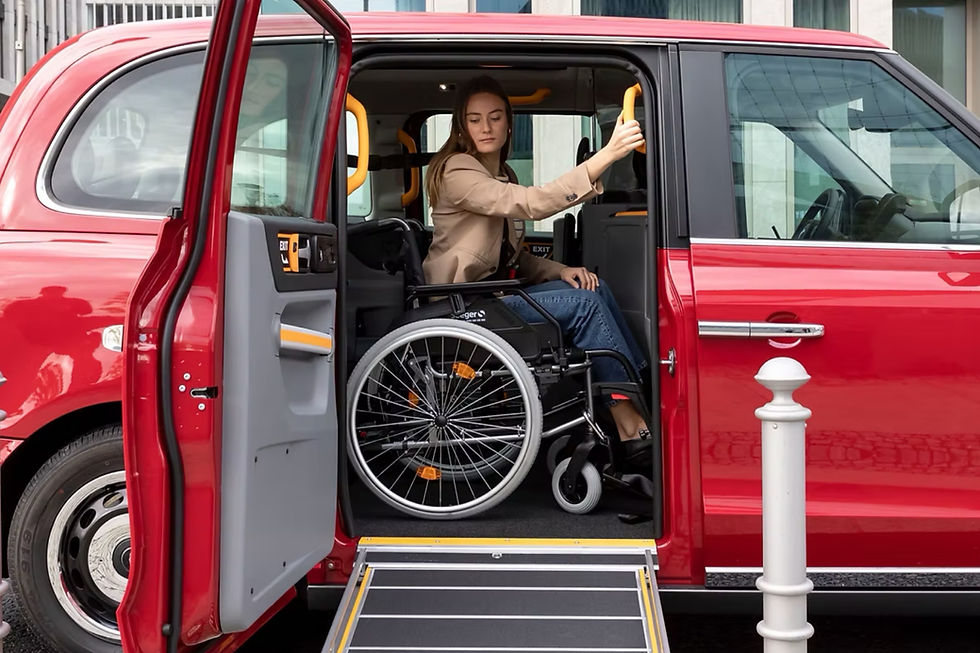

Accessibility and mobility protections for disabled passengers have emerged as a central focus of the Government’s proposed Draft Taxi and Private Hire Vehicle Bill.
The draft framework states that new legislation would seek to “deliver more accessible services for disabled passengers” by strengthening protections and removing barriers to travel across England’s taxi and PHV sector.

The proposals reflect growing concern that accessibility standards vary significantly between licensing authorities, creating inconsistent experiences for passengers who rely heavily on taxis and PHVs for essential journeys.
Government data cited in the draft document shows people with mobility difficulties make almost 70 percent more taxi or PHV trips annually compared with those without mobility issues. The figures reinforce the sector’s importance as a key part of the wider transport network for disabled passengers.
The Government’s proposed taxi reform package places stronger accessibility duties and passenger protections at the core of a future national licensing framework.
The Government argues that current legislation is outdated and poorly suited to modern travel patterns, particularly as booking apps and cross-border working have become dominant features of the industry.
Industry observers expect future reforms could include tighter requirements around wheelchair accessibility, clearer obligations for drivers, improved complaint handling systems and stronger enforcement where drivers fail to meet accessibility duties.
The document also links accessibility improvements to broader social and economic participation. Officials state that weaknesses in taxi and PHV regulation disproportionately affect people with fewer transport alternatives, including disabled people and lower-income households.
Passenger groups have long argued that inconsistent standards between councils have left disabled travellers facing uncertainty over vehicle availability and assistance policies. A more unified licensing framework may reduce those regional differences.

The reforms are expected to undergo pre-legislative scrutiny, allowing disability groups, drivers and licensing authorities to provide evidence before formal legislation is introduced.
The Government says the aim is to create a “modern, joined-up taxi and PHV system” where passengers can expect safe and reliable services regardless of where they travel.