.jpg)



YOU CAN DRIVE, BUT YOU CAN’T HIDE: Why platforms like Uber and Freenow report taxi and PHV driver earnings direct to HMRC

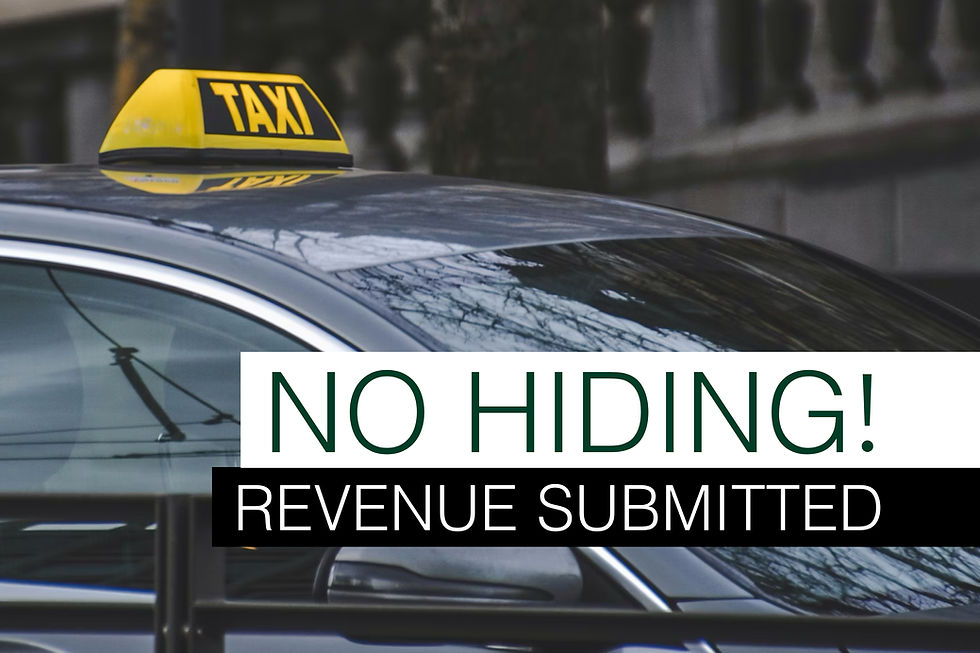

Taxi and private hire vehicle drivers working through app-based operators are now firmly within a formal HMRC data-reporting regime that requires platforms to record, verify and submit driver earnings and key identity details on an annual cycle.
The rules, set in the UK’s adoption of the OECD model for platform reporting, give HMRC a direct line of sight into income generated through ride-hailing and other digital intermediaries.

The Reporting Rules for Digital Platforms apply from 1 January 2024, with reporting to HMRC due each January covering the previous calendar year, according to Government documentation on the measure. HMRC has positioned the framework as a way to improve compliance and reduce tax evasion, while also enabling information exchange with other tax authorities where relevant.
TaxiPoint previously reported that major operators including Uber, Freenow and Gett began the first-stage process of recording driver income as the system came into force, ahead of the first annual submissions to HMRC.
Digital booking platforms including Uber, Bolt and FREENOW by Lyft must collect and submit annual driver income data under the UK’s Reporting Rules for Digital Platforms, tightening the tax compliance net across the sector
The same reporting model extends beyond passenger transport into other platform-mediated sectors, but taxi and PHV services are explicitly within scope as “personal services” facilitated by digital platforms.
Under the rules, platforms are expected to collect personal and financial information that can be used to match drivers to HMRC records, including name, address and National Insurance number, and then report the total income paid out alongside platform commissions or fees. Platforms may collect banking details where available as part of the broader compliance picture.
For drivers, the impact is that HMRC can compare platform-reported totals against self-assessment declarations, reducing the scope for under-reporting, errors or omissions, especially for those working across multiple apps. Each platform reports separately, allowing HMRC to consolidate earnings across services and identify inconsistencies.
The reporting framework does not create a new tax liability by itself, but it increases the likelihood that undeclared income will be identified, and it also requires platforms to issue driver-facing annual income statements to support tax filing. Guidance from tax policy groups has stressed that the obligation to declare income already existed, but the flow of data between platforms and HMRC is now more systematic and harder to ignore.